Monday, September 18, 2017

September 18: Human Rights Day

Claire R.  introduced Human Right speakers, Ms. Lisa Bek-gran, History and Government Faculty and Luke Albert, STUCO and Youth and Government President.

Good Morning,


When I was asked to speak about Human Rights, I had no clue where to begin. How do I , a kid whose just about the same age as the rest of you, tell you all about what you are inherently entitled too as people? I’m someone who has lived my whole in privilege where I haven’t had to fight for my rights. I’ve never had to second guess their safety. Then I realized it. I realized I was totally wrong. In fact, I couldn’t have approached Human Rights more wrong. You see, Human Rights aren’t about what you deserve. Human Rights are about your obligation to everyone else, that their lives are invaluable and you must treat them that way. It’s all about what you should give to others: respect, opportunity, and freedom. One of my favorite examples is the incredibly inspiring Malala Yousafzai. Malala grew up in a Taliban controlled-Swat Valley in NorthWest Pakistan. The New York Times published a documentary in which she spoke about her passion for education and proudly declared that one day she’d be a doctor. She knew the risk to saying all of this and going to school, but she also knew what it meant to countless girls being denied education and opportunity across the world. Later on her way to school, three men boarded her school bus and shot her twice once in the head. Malala then spent over three months recovering from the life-threatening wounds including being in a coma for a couple weeks. You know what she did when she was discharged from the hospital and finished with rehabilitation? She stayed home where her bravery had led the first Right to Education Bill in Pakistan. She continued her advocacy. She spoke before the United Nations in July. All of this because she understood that she had to fight for the right of all girls, all people, to have freedom and an education. She understood the respect, opportunity, and freedom all human beings deserve. So I encourage you, when you think about Human Rights, don’t think about what should be given to you but what you should give to others. Thank you.


Good morning!
Bonjour / Buenos dias / Shubh prab-haat / Zǎoshang hǎo / Guten Tag


As a history teacher...I feel obligated to lead with a bit of, well, history.   


Human rights as an ideal first appeared about 2600 years ago.  When Cyrus the Great conquered Babylon, he freed the slaves and told his subjects they would be able to worship as they chose...not something common among most of his peers in the ancient world.  The ideals associated with Cyrus spread to Greece, India, and Rome, with Aristotle and Cicero bringing us the concept of “natural law.”  Natural law asserts that certain rights are inalienable, by virtue of the human experience.  


1800 years after Cyrus, in 1215, King John of England was coerced into signing the Magna Carta, a charter of liberties and a commitment to the rule of law.  Our founding fathers looked to the Magna Carta as historical precedent for the Declaration of Independence.  


“We hold these truths to be self-evident, that all men are created equal, that they are endowed by their Creator with certain unalienable Rights, that among these are Life, Liberty and the pursuit of Happiness.”


The French took things a step further with the 1789 Declaration of the Rights of Man and the Citizen and produced an even longer list of “natural rights.”


Most of Europe seemed to agree with the concept of natural rights, at least for fellow Europeans, but proceeded to trample human rights around the globe as their empires expanded.  
In 1893, a London attorney was thrown off a train in South Africa.  His crime -- he had purchased a first class ticket and was sitting in his seat.  He would spend the rest of his life fighting for human rights.  You know him as Mahatma Gandhi.


Two world wars later, after millions and millions of deaths, mind numbing slaughter, and the subjugation of much of the population, the world came together, in part, in the form of the United Nations.  Today, the United Nations boasts 193 member nations.


Eleanor Roosevelt, as the chair of the United Nations Human Rights Commission,  was the driving force in creating the 1948 charter of liberties: The Universal Declaration of Human Rights.  The goal of the declaration is “to reaffirm faith in fundamental human rights.”


Human rights have come to mean those rights to which all humans are entitled -- the ways you can expect and deserve to be treated as a person.  The charter identifies 30 rights -- 11 of which are identified here (slides).


In the words of Eleanor Roosevelt:
“Where...do universal rights begin?  ...Close to home -- so close and so small that they cannot be seen on maps of the world.  ...they are the world of the individual person; the neighborhood he lives in; the school or college she attends; the factory, farm, or office where he works.  Such are the places where every man, woman, and child seeks equal justice, equal opportunity, and equal dignity without discrimination.  Unless these rights have meaning there, they have little meaning anywhere.  Without concerted citizen action to uphold human rights close to home, we shall look in vain for progress in the larger world.”
Our charge to you -- be an active citizen.  Protect human rights close to home.  Make a difference right here in the Casady community, Oklahoma City, the state of Oklahoma, the United States, and the world.  We wish you dignity, opportunity, and peace, always.


Modified Zulu farewell:
Go well and go safely,


Peace be always with you.

MD Presentation


Good morning! Middle Division Version
Bonjour / Buenos dias / Shubh prab-haat / Zǎoshang hǎo / Guten Tag


The idea of Human Rights is not all that old -- approximately 2600 years, to be exact.  And over the course of those 2600 years, we could talk about a number of people and events that have shaped our understanding of human rights.


  • Cyrus and his Cylinder -- freeing the slaves and promising religious freedom
  • efforts in Greece, India, and Rome to honor natural rights
  • Aristotle and Cicero and their attention to “natural law”
  • King John and the Magna Carta
  • the Founding Fathers and the Declaration of Independence
  • the French and the 1789 Declaration of the Rights of Man and the Citizen


But what are Human Rights?


Human rights have come to mean those rights to which all humans are entitled -- no matter where you are born, no matter where you live, no matter where you go to school, no matter how rich or poor you are, no matter what language you speak, no matter what religion you practice.  Human rights are the ways you can expect to be treated and deserve to be treated as a person.


In 1945, after two horrific world wars, the nations of the world came together to form the United Nations.  Today there are 193 member nations.


Eleanor Roosevelt, as the chair of the United Nations Human Rights Commission,  was the driving force in creating the 1948 charter of liberties: The Universal Declaration of Human Rights.  The goal of the declaration is “to reaffirm faith in fundamental human rights.”
The charter identifies 30 rights -- 11 of which are noted in the slides I am about to show you.


But first, what do you think should be on the list?  


I’ll give you a hint -- many will seem quite obvious.  For example, raise your hand if you think you have a right not to be tortured.  Great!  Keep your hands up if you think you should have a right to eat.  Keep your hands up, if you think you have a right to take food away from someone else.  You’re correct, theft is not a right.  


Let’s take a look at the slides…


Was there anything on the list that seemed particularly outlandish?  Surprising?  Something you would not want as a right?


I think most of the enumerated rights can be summed up in three words -- dignity, opportunity, and peace.  Or, DOP.  


Eleanor Roosevelt believed, as do I, that “...universal rights begin...close to home -- so close and so small that they cannot be seen on maps of the world.  ...in neighborhoods and schools, in factories and farms...such are the places where every man, woman, and child seeks equal justice, equal opportunity, and equal dignity without discrimination.  Unless these rights have meaning there, they have little meaning anywhere.  Without concerted citizen action to uphold human rights close to home, we shall look in vain for progress in the larger world.”


I am going to ask you to do one thing right now.  After you complete the task, I will need you to face forward and quiet down again fairly quickly.  Here is the task -- Turn to three (not four, not five, etc.) different people near you, shake their hand, or put a hand on their shoulder and say, “I wish you DOP.”  Please begin...


And, now, we’re back.  Well done!


My charge to you after you leave Chapel today -- be an active citizen.  Protect human rights close to home.  Make a difference right here in the Casady community, Oklahoma City, the state of Oklahoma, the United States, and the world.  I wish you DOP -- dignity, opportunity, and peace, always.


Modified Zulu farewell:
Go well and go safely,
Peace be always with you.

Sunday, September 17, 2017

September 17: Women's Day


Come Together on UN International Peace Day at the Capitol

By unaokc on Sep 14, 2017 11:46 am

bfd0b8454f95edaebc76d45669cd4f52--international-day-of-peace-september-1683_980x480_height_p18anatfceqgk1flijmv1vhpc9l5.jpg

Join us on Thursday, September 21st at 6:00 PM and unite at the State Capitol steps to observe United Nations International Peace Day.
Listen to five community leaders working to promote respect, safety, and dignity for all: Maurianna Adams, Rev. T. Sheri Dickerson, Debra Echo-Hawk, Dr. Nyla Ali Khan, and Candace Liger.
5Adams is the founder and President of CommUNITY Alliance of Oklahoma, a non-profit working to facilitate ally development and intersectional coalition building. She has been featured on News 9 and has articles published in The Journal Record, The Oklahoman and various newsletters.
4Dickerson is the founder and Executive Director of Black Lives Matter Oklahoma. She is a current member of the MLK coalition board, OKC PRIDE, Oklahoma Coalition for Reproductive Jusitce, and the Board Secretary of the Nat’l association of Black Social Workers.
1Echo-Hawk is is a Coordinator with the Pawnee Nation Elders and an activist for indigenous rights in Oklahoma. She is co-founder of the Pawnee Seed Preservation Project, an organization that works to preserve indigenous Pawnee corn.
3Khan is a visiting professor at The University of Oklahoma and the author of three acclaimed books. Her second book, Islam, Women, and Violence in Kashmir: Between India and Pakistan, examines the seminal spiritual and political role of women in Kashmir and is used as a teaching text at several universities.
2.jpgLiger is the founder of the Abstract Ebon Collective, Community Organizer for American Civil Liberties Union, and an award-winning performance and spoken word artist. She was recognized for the 2017 Social Justice Activator Award from the YWCA of Oklahoma and the 2017 ACLU Angie Debo Civil Libertarian Award.
We have partnered with community organizations to decorate pinwheels for peace and will be planting them on the South Lawn. We have plenty extra left to decorate. Tell the world why peace is important to you.
After the event we will be exploring nearby Uptown Oklahoma City to relax and celebrate a year of accomplishments and look ahead for the coming challenges.
Interfaith Youth Tour by Oklahoma Conference of Churches

Each September, the OCC’s Annual Interfaith Youth Tour is held on a Sunday afternoon for hundreds of metro students ages 7th – 12th grade.  The young people (with adult leaders) visited houses of worship for different faiths to learn more about each religion.  

The three tour stops were:

1) The Cathedral of Our Lady of Perpetual Help Catholic Church,  3214 North Lake Ave., OKC 73118

2) Temple B’nai Israel, 4901 North Pennsylvania Ave., OKC 73112

3) The Islamic Society of Greater Oklahoma City, 3815 St. Clair, OKC 73112


Saturday, September 16, 2017

September 16: Children and Youth Day


Boys' and Girls' Club Day for Kids Third Saturday in September

JOIN CASADY SERVICE LEARNING AT 3535 N Western Ave, Oklahoma City, OK 73118 TODAY FROM 10:00-2:30 PM

Day for Kids is a national day of celebration that invites YOU to join Boys & Girls Clubs in making a difference for kids in your community. For more than a decade, adults and kids alike have participated in Day for Kids events as a way to advocate for youth. Day for Kids is a celebration of the life-changing work taking place at Boys & Girls Clubs across the nation and a reminder that one day can change a child’s future.

Mr. A Jaye Johnson invited Casady Cyclones to participate in the Day for Kids TODAY, September 16 at Boys and Girls Club at Memorial Park, 3535 N Western Ave, Oklahoma City, OK 73118

The Casady YAC/Service-Learning Booth will have the following activities

1. Peace Rock Art

2. Pinwheels for Peace for me and for the Capitol Steps on Peace Day 9/21/2017

3. Rock Band by Cade J. and Devon J.


Memories of Day for Kids


Boys and Girls Club planted the pinwheels that welcomed Club members to the Day for Kids


OCU students facilitated the Casady Pinwheels for Peace Booth


Boys and Girls Club and OCU volunteers facilitated the Peace Rocks  Activity


Panda House and Boys and Girls Club Staff served lunch at the Club's Kitchen during Day for Kids 2017

Dance Lessons and Bike Give Away during Day for Kids


Boys and Girls Club members donated their pinwheels for Peace Day at State Capitol, 6:00 pm on 9/21 and for school in Florida


Cyclones manpower the Rock Band Booth during Day for Kids at Boys and Girls Club at Memorial Park


The Peace Path from Casady Girl Scouts hosting the finished Pinwheels for Peace donated by some members of the club


PD Lavender Class thoughts of Peace on their Pinwheels for Peace.  Thoughts provided 9/12/17 as they prepared their Pinwheels for the International Day of Peace 

1. Cora: Mommy, Orange, My Toys, My Dad, Alex, Mary...My Friends give me peace
2. Clare: What makes you happy? Colors, Blue, Mama.  Mama is coming
3. Connor:  Me like Salt Trucks, Trucks, Mommy, Daddy, and Claire, Paw Paw, GaGa.
4. Noah F.:  Mommy (He spelled it!), Thomas the train, That guy (points to Connor), Caleb and Daddy
5. Lorelei: Jessica's House, Ms. Linda's house, My mommy, father and dog, Me and Gabriel playing
6. Alex: When Zac lets me play, Mommy, Smiles, Purple
7. Mary: My blanky; it's pink and has a 'y'.  My daddy is Christopher. My mommy is Elizabeth.  To color 
8. Noah B.: Going to TyTy and Simees House, Daddy and School, Mommy, My Babies
9. Will V-K: An escalator...up high, Playdough, School, Mommy
10. Noah G.: Mommy and Daddy, School, My Brother, My Cousin
11. Ella: What makes you happy?  When someone shares with you, Kindness, Peace-Ella, Happiness. Ella made me a tiger.
12. Being with my daughter, Getting my hair washed, Yoga, Mrs. Marquardt, Road Trips
13. Claire- I am going on a boat trip.  I like going outside.  Hearts are my favorite to draw.  I like the colors of the rainbow
14. Avery- Hearts are my favorite to draw.  I like being peaceful, doing yoga.  I like watching rainbow after the rain stops. I like my Nana and Papa
15. Emma: A heart, Staying in bed makes me peaceful. Snowflakes, Rainbows
16. Tavi: Casady School and everyone, I like.  Mining up gold and a diamond in Minecraft. My big truck carrying a big load. Olden times when they didn't have cars.

Mrs. Howell's Class
1. Zoey: Sleeping in my bed makes me happy and peaceful.  Eating maccaroni makes me happy. Riding in the truck makes me happy. Rainbows make me peaceful.
2. John: My bed makes me peaceful.  My school makes me peaceful. Catching butterflies makes me peaceful.  Sticking my head out the car window makes me peaceful. 
3. Maggie: My house makes me happy and peaceful.  My bed makes me peaceful. My dog, Scout makes me happy.  Flowers make me happy. 
4. Asa: Sleeping in my bed makes me peaceful. My mommy, daddy, and baby make me happy. Eating carrots makes me happy. Eating eggs makes me happy.
5. Amelia: A birthday party makes me happy. Sleeping makes me peaceful. Presents make me happy. Watching a movie makes me peaceful.
6.Mia: Sleeping in my big bed makes me happy and peaceful. Playing with my baby dolls makes me happy and peaceful. Sleeping with my new baby makes me happy. My beautiful bedroom makes me peaceful.
7.Grant: Feeding the giraffe and watching butterflies with my mom makes me happy and peaceful. Me and my mom reading a story makes me happy. Building with legos, without my brother knocking them down makes me happy.My mom and dad hugging makes me peaceful and happy.
8.Brooks: Sandwiches and food make me peaceful. Lots of circles inside of other makes peaceful. A hand tracing robot makes me happy and makes hands. 2 robots walking around makes me peaceful.
9.Sadie: Ferris Wheels makes me happy. Friends make me peaceful. Merry-go-rounds make me peaceful. My daddy makes me happy and peaceful. 
10. No name: Pink stars. My green blankies make me happy. Starts make me happy because I am scared of the dark. The blanket on the bed makes me happy. 
11. Leia: It makes me happy to lay down by my mom. Snorkeling with my family makes me happy. Rainbows make me happy. Watching people make gue with my sister and brother on the i-pad makes me peaceful.
12. Alex: Being with my cousin makes me happy and peaceful. Watching movies makes me peaceful. Being with my dad makes me happy. Going to Casady makes me happy.
13. Hannah: My house makes me happy. Snow and snowmen make me happy. Rainbow colors make me happy. Ballerinas make me happy. 


Friday, September 15, 2017

September 15: Health


Junior Elisson G. introduced our UD Peace Week, Chapel speakers, for Health Day, Dr. Marcia Moore and Chef Jeremy Canning of the Sage Dining Team.

Peace Week September 2017
Mental Health and Peace - U.D. Chapel talk
Marcia S. Moore, Ph.D.
Director of Psychological Services
Picture and Videos added by Carmen Clay, Service-Learning Director


Thinking about mental health is an important consideration during Peace Week because mental health is a crucial part  of  inner peace, peaceful relationships and ultimately world peace.
Mental health includes our emotional, psychological/personal, and social well-being.  It affects how we think, feel and act.  It also helps determine how we handle stress, relate to others and make choices.  Positive M.H. allows people to *realize their full potential, *cope with the stresses of life, *learn and work productively, and *make meaningful contributions to their communities. M.H. is important at every stage of life, from childhood and adolescence through adulthood.  
Ways to maintain positive mental health include *connecting with others, *having positive thoughts, *staying physically active, *getting enough sleep, *developing and using coping skills, and *helping others.  You may question, "Why is 'helping others' part of maintaining positive mental health?"  I was fascinated to learn this week about recent research which suggests that human beings have a "compassion instinct" which neuroscientists can measure in a primitive part of the brain called the amygdala.  The amygdala primarily has been understood as the response center for survival, the "stress response" center that recognizes danger (like the presence of a menacing tiger) and causes us to react/ protect ourselves by fighting, fleeing or freezing.   Our "compassion instinct" prompts us to help other people, which  protects and enhances the survival of humanity, and also helps us have positive thoughts about ourselves and to feel good.  Both kept our ancestors alive to pass on their genes.


Let's focus on mental health helping us cope with the stresses of life as one pathway to peace.  Many people these days, including some students, feel truly "stressed".   When we get stressed or upset, our body tenses up to fight, flee or freeze.  The number one way to reduce tension is through relaxation.  Studies have shown that relaxing routinely actually improves the expression of genes that help control the fight-or-flight stress response.  Somehow the effects of soothing and calming your body and your mind sift all the way down to affect tiny atomic units within your molecules of DNA: amazing!!

So how do you relax?  Do you know and choose healthy ways of relaxation?  Some healthy strategies to relax and deal with stress include taking a hot bath, talking with a friend or trusted adult, reading and getting exercise.  Some of you have learned to use visualization and/or relaxation techniques such as deep breathing exercises, yoga and meditation.  


In addition to relaxation, to become and to stay stress-resistant we need to do something fun at least once a week.  Does your way of having fun respect and protect your mind and your body?  Think with me for a moment about how often you could say, "I avoid smoking cigarettes and/or vaping;"  "I avoid using illegal or other mind- or mood-altering drugs;"  "I avoid drinking alcohol."  These chemicals stress and damage your developing brain, your mind and your body.
Do you get seven to eight hours sleep most nights?  At your age, even more sleep is recommended  but with homework, sports, and other activities, realistically a minimum of seven to eight hours of sleep is really good.  Sleep renews the mind and while we sleep, the mind stores what we've learned that day in long term memory.
Doing something positive for ourselves every day helps to relieve and resist stress. What do you do or could you do that's positive for you?  You could tell yourself, "I like myself flaws and all," for example.  One thing I do is to begin and end each day thinking about something for which I am grateful and thanking God for those blessings.   keeping a growth mindset is always positive.  You and I can remind ourselves, "My intelligence and talents are not fixed.  I'm growing.  When I'm confronted by something difficult, I will persevere until I get it.  Whether I do it perfectly or not, I will learn something."  A growth mindset leads to success and helps to keep us positive thinkers and doers.
Deriving faith and security from our religious and/or spiritual beliefs alleviates stress, too.  We know we are not alone and we feel more secure and peaceful as we relate to a power and presence greater than ourselves.
Relationships are extremely important in helping to reduce stress and stay positive.  Having one or more friends you really enjoy and trust and you can tell your innermost thoughts and feelings and having at least one parent or adult who lives with you or nearby, who is reliable and whom you admire and trust help to support and encourage you, and let you know you are loved and valued.  
And then there's eating balanced, nutritional meals and it's time to introduce Chef Jeremy  Canning.


SAGE Dining Services® - Scratch Cooking from SAGE Dining Services® on Vimeo.

During Activities, Dr. Carlos Torres will show the documentary Happy to observe Health Day and the beginning of Hispanic Heritage Month


Image result


http://www.baylor.edu/multicultural/index.php?id=91993


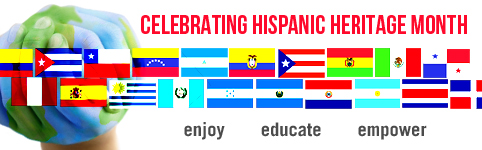
National Hispanic Heritage Month is the period from September 15 to October 15 in the United States, when people recognize the contributions of Hispanic and Latino Americans to the United States and celebrate the group's heritage and culture.
September 15 was chosen as the starting point for the celebration because it is the anniversary of independence of five countries: Costa Rica, El Salvador, Guatemala, Honduras and Nicaragua. All declared independence in 1821. In addition, Mexico, Chile and Belize celebrate their independence days on September 16, September 18, and September 21, respectively.